
Fishing Guides
Fishing Games 101: How to Play and What to Check Before You Start
Learn how online fishing games work, including aiming, action values, weapons, targets and responsible session management.
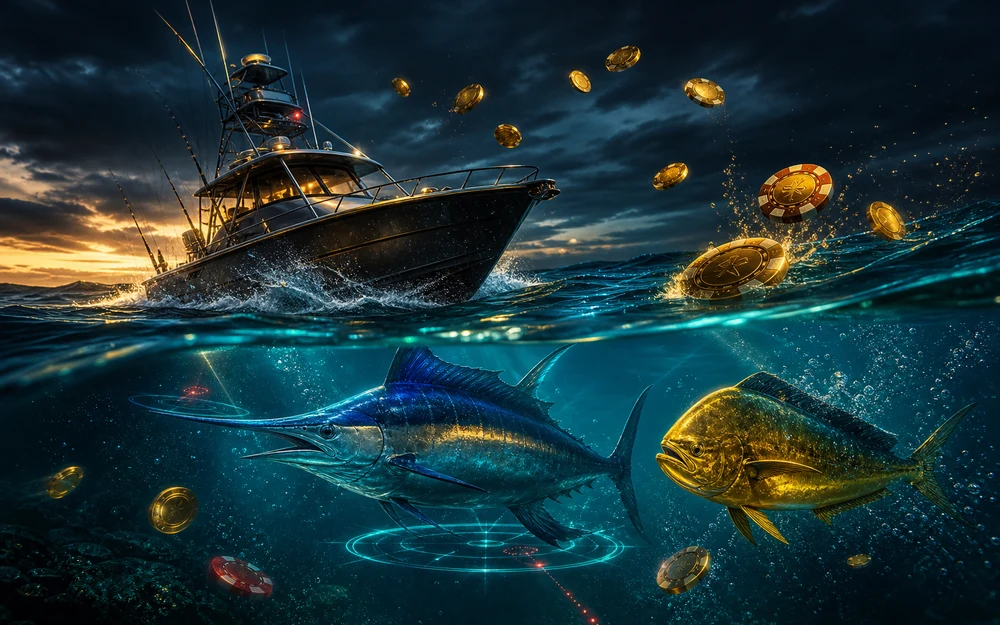
Online fishing games combine colourful underwater environments with arcade-style controls. Instead of waiting for reels to stop, the player usually aims at moving targets and fires using an on-screen cannon or weapon. This creates a faster and more interactive feel, but it also makes understanding the controls especially important.
Every fishing game has its own rules, values and special features. This guide explains the common structure, the information worth checking and how to manage a session responsibly.
What Is an Online Fishing Game?
An online fishing game presents a screen filled with moving sea creatures, special targets and visual effects. The player selects an action value, aims and fires. An action may use the selected amount from the available balance. If a target is successfully captured according to the game rules, the game awards the corresponding value.
Fishing games remain games of chance. Aiming at a particular target does not guarantee that it will be captured. Visual skill and timing may shape how the player interacts with the game, but the underlying rules determine the outcome.
The combination of manual controls and random outcomes is what makes fishing games feel different from online slots.
Learn the Controls First
Before starting, identify the main controls. A typical fishing game may include:
- Aim or directional control
- Fire button
- Automatic-fire option
- Action-value selector
- Weapon switch
- Target lock
- Special ability
- Information or paytable button
Do not activate automatic fire until you understand the cost of each action. A fast firing rate can use a session budget more quickly than expected.
If a game offers a practice or information mode, use it to understand the screen before selecting a real-play value.
Understand the Action Value
The action value is one of the most important settings. Each shot or action may use the selected amount. Increasing it can increase the amount at risk and may change the potential value attached to a successful target.
Before firing:
- Confirm the current action value.
- Check whether changing weapons also changes the cost.
- Decide how many actions fit within your planned budget.
- Recheck the value after a bonus, level change or game restart.
A small difference can add up quickly when actions happen several times per second. Start at a value that gives you enough time to understand the game.
Targets and Their Values
Fishing games often include several target types. Smaller creatures may appear frequently, while larger creatures, bosses or special targets may carry different values or mechanics.
The game-information screen should explain:
- Target names
- Displayed values or multipliers
- Special effects
- Boss conditions
- Bonus targets
- Time-limited targets
- Any target-specific rules
A larger displayed value does not mean the target is easier to capture. High-value targets may require more actions without guaranteeing a result.
Avoid chasing one target simply because it looks valuable. Decide in advance how much of the session budget you are willing to use before changing approach or stopping.
Weapons, Cannons and Power Levels
Some fishing games allow the player to switch between cannons, ammunition types, lasers, nets, bombs or other effects. These can change the presentation, action cost or targeting method.
A weapon may:
- Target one creature
- Affect an area
- Lock onto a moving target
- Fire automatically for a limited time
- Increase the action value
- Trigger a separate feature
Special effects can look powerful, but they do not guarantee a positive return. Review how each weapon is activated and whether it uses additional balance.
Automatic Fire and Target Lock
Automatic fire can reduce the need to press the action button repeatedly. Target lock can keep the aim focused on one creature while it moves across the screen.
Both tools are convenient, but they can make spending feel less visible. If you use them:
- Set a short time limit
- Keep the action value low while learning
- Watch the balance rather than only the animation
- Disable the feature when the chosen target leaves
- Pause regularly to review the session
Automation should never replace active awareness of the amount being used.
Special Rounds and Boss Encounters
Many fishing games include special stages, boss creatures or shared-screen events. These may introduce different weapons, target behaviours or visual effects.
Before participating, check whether:
- Entry is automatic or optional
- Actions use the normal selected value
- A separate cost applies
- The round has a time limit
- Values are shared or individual
- The feature changes the control scheme
Do not assume that a visually dramatic event has a better expected outcome. Treat every feature as part of the entertainment design.
How Fishing Games Differ from Slots
Slots use a spin-based interface. The player selects an action value and starts a round, after which the reels present the result.
Fishing games use continuous target-based interaction. The player may choose where and when to fire, but the game rules still govern whether a target is successfully captured.
The main practical difference is pacing. Fishing games can process many actions quickly, especially with automatic fire. This makes budget awareness particularly important.
Choosing a Fishing Game on G8
When comparing G8 fishing games, consider:
Visual Clarity
The targets, action value and controls should remain visible even when the screen becomes busy.
Control Complexity
Beginners may prefer a simple cannon and clear target values. More experienced players may enjoy additional weapons and special stages.
Pace
Some games fill the screen with fast-moving targets, while others use a calmer pace. Choose the style you find easiest to follow.
Mobile Layout
On a smaller screen, buttons should remain easy to select without covering important information. Check the layout before beginning a longer session.
Rules and Information
Open the information panel. A game should explain its controls, target values and special features clearly.
A Responsible Fishing-Game Session
Fishing games can feel continuous because there is no traditional pause between spins. Create your own stopping points.
Before starting:
- Set a fixed budget
- Set a time limit
- Choose a starting action value
- Decide when to take a break
- Avoid automatic fire until you understand the pace
During the session:
- Check the balance regularly
- Do not increase the action value to recover a loss
- Pause after a special round
- Stop if the pace feels difficult to control
After the session, leave the game when you reach the time or spending limit, regardless of the result.
Common Fishing-Game Mistakes
Using the highest value immediately
A higher value can use the budget quickly. Begin with a comfortable level and learn the controls first.
Focusing only on large targets
Large targets may look more valuable, but they do not guarantee a successful capture.
Leaving automatic fire running
Automatic fire can continue using the selected value rapidly. Monitor it actively.
Ignoring weapon costs
Some weapon or power changes may affect the action value. Check the display after every change.
Treating recent outcomes as a pattern
A previous target result does not guarantee what will happen with the next target.
Explore G8 Fishing Games
The G8 Fishing page brings featured games, popular titles and new additions into one category. Review each game's controls and information before starting, then choose a pace and value that fit your entertainment plan.
- Explore G8 Fishing Games
- Browse G8 Slots
- Review Responsible Gaming at G8
Frequently Asked Questions
Do fishing games require skill?
They use interactive controls such as aiming and firing, but the game rules determine outcomes. Control familiarity does not guarantee a result.
What does the action value mean?
It is the amount that may be used for each shot or action. Check it before firing and after changing weapons.
Are bigger targets always better?
No. Larger targets may display different values, but they may also require more actions and never guarantee a positive result.
Is automatic fire safe to leave running?
It should be monitored closely because repeated actions can use a budget quickly.
Continue exploring
Find the right G8 category
Browse titles, check the game information and keep every session within the limits you set.